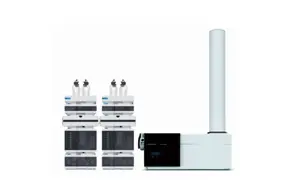

The pharmaceutical industry is experiencing a transformative shift, driven by AI-based drug discovery in the realm of biologics. Biologics, complex therapies derived from living organisms, hold immense potential for treating diseases like cancer and autoimmune disorders, but their development is challenging due to intricate molecular structures and unpredictable behaviors. AI antibody discovery is revolutionizing this field by streamlining processes from target identification to manufacturing optimization. By leveraging its ability to analyze vast datasets and predict outcomes, AI accelerates the design of life-saving therapies, enhancing efficiency and reducing costs, thus reshaping the future of pharmaceutical innovation with more effective treatments.
Biologics represent a pioneering class of pharmaceuticals, distinct from small-molecule drugs due to their complexity and therapeutic precision. Derived from living organisms, biologics include antibodies, proteins, peptides, and nucleic acids, enabling highly targeted treatments for conditions like cancer, autoimmune disorders, and genetic diseases. Their biological origins provide unique mechanisms of action, but their large size, intricate structures, and environmental sensitivity pose significant challenges. Understanding their behavior requires advanced computational tools, making antibody AI an invaluable asset in their development.
Antibodies, a critical subset of biologics, have evolved beyond simple monoclonal therapies. Innovations like multispecific antibodies, which target multiple disease pathways, and antibody-drug conjugates (ADCs), combining antibody specificity with potent drugs, are transforming cancer treatment. These advancements, driven by AI antibody discovery, have propelled biologics to the forefront of the pharmaceutical market, with monoclonal antibodies like Humira and Keytruda achieving blockbuster status, generating billions in revenue. The complexity of biologics enables precise molecular interventions, offering hope for previously untreatable conditions. As research deepens our understanding, biologics are set to revolutionize healthcare, delivering therapies with unparalleled efficacy. AI’s role in analyzing their properties and optimizing their design through AI-based drug discovery is critical to unlocking their potential, paving the way for personalized medicine and innovative treatments.
Biologic drug development is a complex, high-risk endeavor marked by high attrition rates, lengthy timelines, and substantial costs. Many candidates fail due to poor efficacy, safety issues, or manufacturing difficulties, driven by intricate biological factors and unpredictable molecular behaviors. AI antibody discovery addresses these challenges by analyzing vast datasets, including genomic sequences, protein structures, and clinical records, to predict pitfalls early. This predictive capability allows researchers to focus on promising candidates, reducing failed trials and conserving resources, thus enhancing the predictability of the development process.
The traditionally decade-long timelines of biologic development are significantly shortened through AI-driven optimization. By rapidly processing complex data, antibody AI accelerates critical stages like target identification, lead selection, and preclinical testing, enabling faster iteration and expediting access to therapies. Additionally, the high costs, often exceeding billions per drug, are mitigated as AI optimizes manufacturing processes, streamlines clinical trials, and minimizes costly iterations. By predicting optimal parameters and reducing waste, AI enhances efficiency, making therapies more affordable and sustainable. This transformative approach, powered by AI-based drug discovery, not only addresses the uncertainties of biologic development but also reshapes its economics, ensuring resources are used judiciously and improving access to innovative treatments for patients worldwide.
AI is fundamentally transforming biologic drug discovery by addressing challenges with unprecedented efficiency and precision. In target identification and validation, AI excels at analyzing vast datasets, including genomic sequences and protein structures, to pinpoint disease-related molecular targets. Through predictive modeling and in silico simulations, AI antibody discovery prioritizes and validates these targets, enabling researchers to focus on promising candidates, thus saving time and resources. This targeted approach streamlines early development stages, reducing exploration of less viable options.
In antibody design and optimization, antibody AI revolutionizes the creation of precise therapies. By analyzing antibody-target interactions at the molecular level, AI predicts binding affinities and optimizes sequences for enhanced potency, stability, and reduced immunogenicity. Machine learning algorithms evaluate vast libraries of antibody variants, identifying those with optimal properties, which accelerates the development of highly specific treatments tailored to specific diseases. Similarly, in lead candidate selection, AI ranks potential drug molecules based on potency, safety, and developability, ensuring only the most viable candidates advance to preclinical and clinical trials, regardless of their source.
AI-powered predictive modeling further enhances development by simulating drug interactions, predicting side effects, and identifying patient populations likely to benefit from therapies. These in silico simulations provide critical insights into drug efficacy and safety, enabling personalized treatment strategies. Additionally, AI optimizes manufacturing by analyzing parameters for cell culture, purification, and formulation, improving efficiency and product quality while reducing costs. Collectively, these advancements in AI-based drug discovery accelerate development, lower expenses, and enhance patient outcomes, positioning AI as a cornerstone of biologic drug discovery.
From the perspective of Sungen Biomedical, the future of biologic drug discovery is intertwined with AI’s evolution, promising greater precision and efficiency. As algorithms advance and biological datasets grow, AI antibody discovery will drive the development of novel therapies like multispecific antibodies and ADCs. Integrating AI across the pipeline will shorten timelines and reduce costs, while advanced machine learning enhances predictions of drug efficacy and safety, minimizing trial failures. Combining AI with synthetic biology and high-throughput screening will enable rapid design-validation cycles, tackling complex targets. AI-driven platforms will augment human ingenuity, delivering effective, accessible therapies and meeting the pharmaceutical industry’s expectations for clinical success.
Reference
"AI in Antibody Discovery." MAbSilico, April 22, 2025, https://www.mabsilico.com/news/ai-in-antibody-discovery.
Updated: Oct 22, 2025